Seasonal planning
Churchill Polar Bear Season: When to See Polar Bears
A month-by-month guide to polar bear season in Churchill, Manitoba — migration timing, weather, daylight and the best time to see polar bears in Churchill.
Polar bear season in Churchill is driven by ice, not by the calendar. Western Hudson Bay freezes and thaws every year, and the bears' movements follow that cycle closely.
Understanding the cycle is the single most useful thing a traveller can do before booking, because it explains why late October looks nothing like July and why one week can differ from the next.
Why the bears gather near Churchill
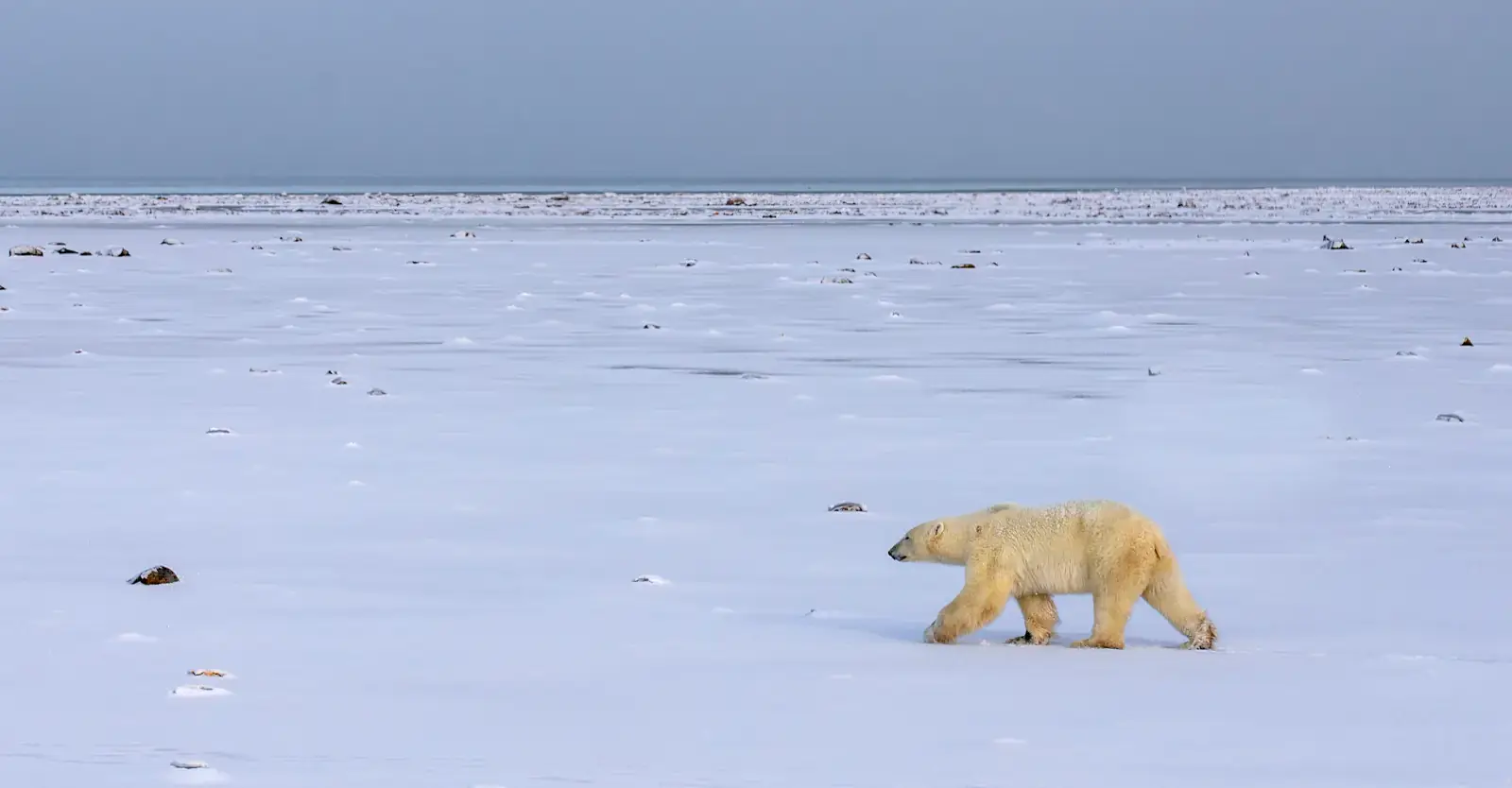
Polar bears hunt seals from sea ice. When Hudson Bay melts in summer, the Western Hudson Bay population comes ashore and lives largely on stored fat. As autumn cools, bears move back toward the coast, and the Churchill area sits on that return route.
Freeze-up often begins near Churchill because of freshwater outflow from the Churchill River and local currents, which is why bears concentrate here rather than further south.
Month by month
July and August
Beluga whale season. Thousands of belugas enter the Churchill River estuary. Bears are ashore, usually resting inland or along the coast, and are seen from boats or on foot excursions rather than tundra vehicles.
September
Autumn colour on the tundra, active birdlife and the first shift toward the coast. Bear numbers near town start to build but remain lower than peak weeks. Aurora becomes visible again as nights lengthen.
October
The classic build-up. Temperatures drop, vegetation dies back and visibility improves. By the last week of October, bear activity near the coast is usually high and tundra vehicle trips are in full swing.
November
The most concentrated weeks, and the coldest. Bears are alert and waiting for the ice. Once the bay freezes, sometimes mid-November, sometimes later, animals move offshore and the season closes quickly.
The best time to see polar bears in Churchill
If your only goal is bear viewing, the last week of October through the middle of November is generally the strongest window in Churchill Manitoba.
If you want a broader Arctic trip with wildlife, culture and aurora, early to mid October offers milder conditions, good bear chances and more comfortable field days.
Weather, daylight and what it means for viewing
Early October days are often just above freezing with around eleven hours of daylight. By mid November, daytime temperatures commonly sit well below freezing, wind chill is significant and daylight has shortened to roughly eight hours.
Shorter days are not a problem for viewing: low Arctic light is excellent for photography, and bears are frequently active near dawn and dusk.
Booking ahead
Peak-season capacity in Churchill is genuinely limited by permits, vehicles and hotel rooms. Travellers commonly book a year or more ahead for late-October and November dates, and shoulder weeks in September and early October stay available longer.
Frequently asked questions
- When is polar bear season in Churchill, Manitoba?
- The main viewing season runs from roughly early October to mid or late November, peaking in the last week of October and the first half of November.
- Can you see polar bears in Churchill in summer?
- Sometimes. Bears are ashore in July and August and are occasionally seen along the coast, but summer trips focus on beluga whales rather than reliable bear viewing.
- Does the season change from year to year?
- Yes. Freeze-up timing varies, and a late freeze extends viewing while an early one ends it. Operators plan around long-term averages rather than any single year.
Match your dates to the season
Every departure on our calendar is dated, so you can line up your trip with the part of the season you want.
View trip dates