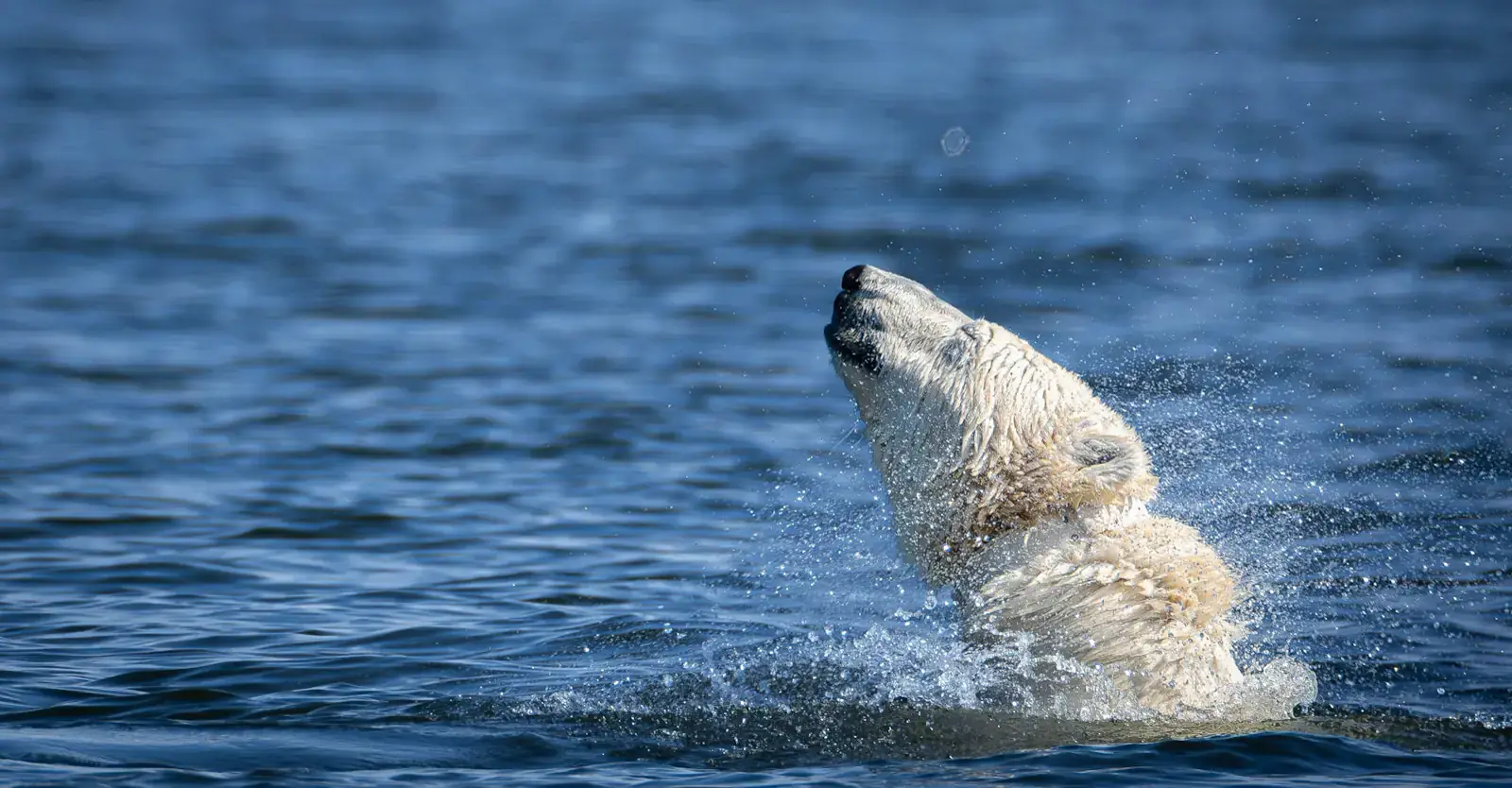
Geography
Churchill and Hudson Bay
How Hudson Bay shapes Churchill: freeze-up and break-up, the Churchill River estuary, polar bear migration routes and the beluga whales of the bay.
Everything distinctive about Churchill comes from Hudson Bay. The bay's annual freeze and thaw dictates when polar bears are ashore, when belugas arrive, and what the town's weather does month to month.
This page explains the geography behind Churchill Hudson Bay polar bear viewing.
An inland sea
Hudson Bay is a vast, shallow inland sea reaching deep into northern Canada. Its size and latitude give the region a subarctic climate far harsher than its latitude alone would suggest, and its ice cycle drives regional ecology.
Freeze-up and break-up
The bay typically begins freezing in November and clears through June and July. Polar bears need that ice to hunt seals; when it goes they come ashore, and when it returns they leave.
Freeze-up often starts near Churchill because freshwater from the Churchill River freezes at a higher temperature than saltwater and local currents concentrate ice along this coast.
The Churchill River estuary
Where the river meets the bay, warmer, food-rich water attracts thousands of beluga whales each summer to calve and moult. The same estuary shaped the town's history as a fur-trade port and later a grain terminal.
Migration routes
Bears move along the coast toward the Cape Churchill area as autumn advances, which is precisely why the Churchill Wildlife Management Area is where tundra vehicles operate.
A changing bay
Researchers monitoring Western Hudson Bay have documented shifts in ice timing over recent decades, with consequences for how long bears must fast on land. Responsible operators support and fund this monitoring rather than speaking over it.
Frequently asked questions
- Why do polar bears gather at Churchill on Hudson Bay?
- Because ice tends to form early along this stretch of coast, giving bears the earliest route back onto the bay to hunt seals.
- When does Hudson Bay freeze at Churchill?
- Usually from November, though the exact timing varies year to year and determines when the bear-viewing season ends.
- Why are there beluga whales at Churchill?
- The Churchill River estuary offers warmer, food-rich and predator-sheltered water where belugas gather in summer to calve and moult.